Sight AI Review: Automated SEO Content Generation and Publishing Explained
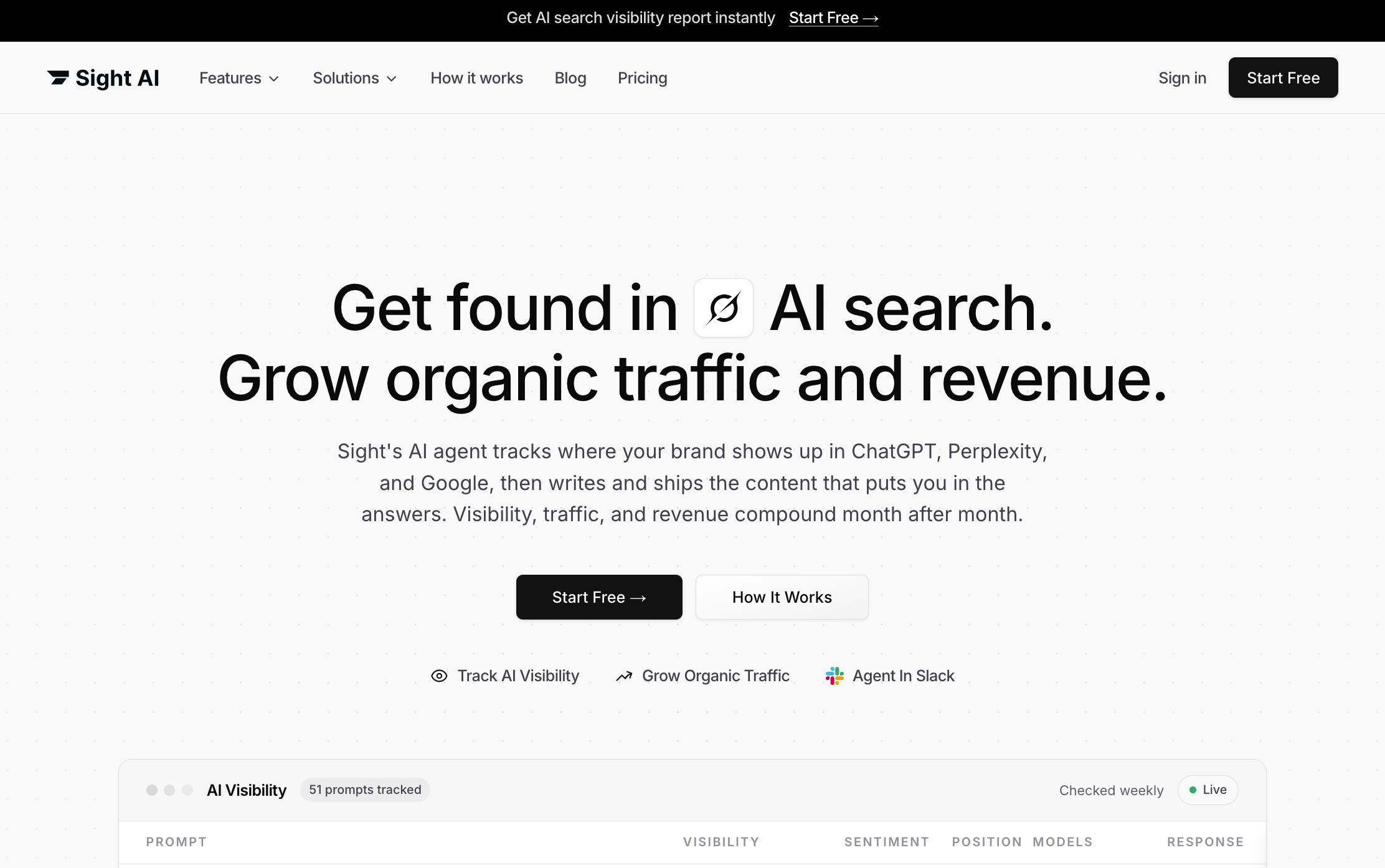
Sight AI combines SEO-focused article generation, publishing integrations, and AI visibility tools in one workflow. This review explains how it works, where it can save time, and why human editorial review still matters.
Written by
Today's Living Channel
Dates
- Published
- 7 Sept 2026
- Updated
- 7 Sept 2026
We may be compensated through affiliate links, sponsored content or partnerships. Compensation does not guarantee a positive review. Learn more
Quick verdict
Sight AI combines SEO-focused article generation, publishing integrations, and AI visibility tools in one workflow. This review explains how it works, where it can save time, and why human editorial review still matters.
- Section
- AI writing tools
- Format
- explainer
- Read time
- 13 min
Keeping up with content demands is one of the most persistent headaches in digital marketing. Whether you run a SaaS blog, an affiliate site, or a small marketing team, you often need more content than your team can realistically produce. Many AI writing tools help with drafting, but still leave research, SEO checks, internal linking, and publishing to you.
Sight AI takes a broader approach. It is designed to support the content workflow from a target keyword through article generation and CMS delivery. That makes it worth examining as more than a basic text generator.
This review explains what Sight AI does, how its automated workflow operates, where human review remains necessary, and who may benefit most. If you want to evaluate it yourself, Explore Sight AI.
From Blank Page to Published Post: What Sight AI Actually Does
Most AI writing tools solve one piece of the puzzle. You get a text generator, maybe with some SEO suggestions bolted on, but the actual workflow still depends on you. You research the topic, build the outline, write or edit the draft, optimize for keywords, add internal links, and then manually upload everything to your CMS. Each handoff between those steps is a friction point where time disappears.
Sight AI is designed to collapse those handoffs into a single connected system. The core workflow runs like this: you input a target keyword, and the platform generates a structured content plan before any body copy gets written. That plan includes an outline with section-level guidance, a link strategy with internal linking recommendations, and research notes to ground the draft. From there, the AI produces the article itself, and the finished content can be pushed directly to a connected CMS, either on demand or on a schedule.
The distinction between Sight AI and a generic AI writing tool comes down to that planning layer. A text generator produces raw output. Sight AI is intended to function as an end-to-end SEO content system, with built-in awareness of on-page signals that actually move the needle in organic search: heading hierarchy, keyword placement, meta descriptions, and internal link structure. The output is shaped around search intent from the start, not retrofitted with SEO considerations after the fact.
In terms of content types, the platform targets the formats that drive most organic search strategies: long-form blog posts, explainer articles, product reviews, and category pages. These are the workhorses of content marketing, the pieces that take the most time to produce consistently and benefit most from a structured, repeatable process.
It's worth being clear about what this means in practice. Sight AI isn't writing investigative journalism or deeply reported features. It's designed to handle the structured, intent-driven content that search engines reward and that content teams need to produce in volume. For that specific use case, the end-to-end pipeline approach is a genuine departure from tools that simply generate text and hand the rest back to you.
Think of it less like hiring a writer and more like installing a production line. The output still needs quality control, and we'll get to that. But the throughput potential is meaningfully different from a tool that only handles one stage of the process.
Inside the Engine: How the Automated Pipeline Works
Understanding the step-by-step process helps clarify why the pipeline approach matters. Here's how the system moves from a keyword to a published post.
Step 1: Keyword Input and Content Strategy. You start by entering a target keyword. The platform uses this to generate a content strategy layer: it maps the search intent, identifies the appropriate content format, and produces a structured outline before drafting begins. This isn't just a rough skeleton. The outline includes section-level guidance, suggested word count targets per section, and notes on what each part of the article should accomplish.
Step 2: Link Strategy and Research Notes. Alongside the outline, Sight AI generates internal linking recommendations with anchor text suggestions tied to URLs you provide. It also produces research notes to guide the draft, which helps the AI-generated content stay grounded rather than drifting into generic filler. This planning layer is arguably the most meaningful differentiator between Sight AI and simpler text generators.
Step 3: AI-Assisted Drafting. With the plan in place, the system drafts the article. Because the structure is defined before writing begins, the output is shaped around the outline rather than generated as a stream of text that needs to be reorganized afterward. Heading hierarchy, keyword placement, and section flow are baked into the drafting process.
Step 4: Editorial Review. The draft surfaces for human review before publishing. This is the stage where brand voice adjustments, accuracy checks, and any editorial refinements happen. The system is designed to produce content that's ready to review, not content that needs to be rebuilt from scratch. How much editing is required will vary depending on the topic complexity and how well the platform has been calibrated to your voice.
Step 5: Publishing Automation. Once the content clears review, Sight AI can push it directly to connected CMS platforms. This is the last-mile piece that often gets underestimated. Content teams frequently have drafts sitting in limbo because the upload, formatting, and scheduling steps create their own bottlenecks. Automated publishing removes that friction, allowing content to go from approved draft to live post without manual intervention.
The planning-first architecture is worth emphasizing because it changes what automation actually delivers. Many AI tools produce text quickly but leave you with output that doesn't match your SEO needs, requires significant restructuring, or lacks the internal linking and heading structure that search engines reward. By generating the strategic layer before the draft, Sight AI is designed to produce content that fits into a broader SEO architecture rather than content that exists in isolation.
That said, the quality of the output is still tied to the quality of the inputs. A well-defined keyword with clear search intent will produce better results than a vague or ambiguous topic. The system amplifies good strategy; it doesn't substitute for it.
SEO Features Under the Microscope
For a tool positioned as an SEO content system, the on-page mechanics deserve a close look. Here's what Sight AI is built to handle, and why each piece matters.
Keyword Targeting in Titles and Headings. The platform is designed to place the target keyword in the article title and primary H2 headings in ways that align with how search engines read content hierarchy. This isn't just about keyword density; it's about signaling topical relevance through structure. A heading hierarchy that reflects search intent helps both crawlers and readers understand what a page is about.
Meta Description Generation. Sight AI generates meta descriptions as part of the content output. This is a small but meaningful detail. Meta descriptions don't directly influence rankings, but they affect click-through rates from search results pages, and they're easy to neglect in high-volume content workflows. Having them generated automatically and ready for review reduces the chance they get skipped entirely.
Internal Link Planning with Anchor Text. This is one of the more distinctive features in Sight AI's SEO toolkit. The system maps anchor text to relevant URLs that you provide, generating internal linking recommendations as part of the content plan. This matters for two reasons. First, internal links distribute authority across your site and help search engines understand the relationship between pages. Second, anchor text specificity signals topical relevance. Generic anchor text like "click here" does far less SEO work than descriptive, keyword-relevant phrasing.
Many AI content tools produce articles that exist as isolated pieces, with no attention to how they connect to the rest of your site. Sight AI's internal linking feature is designed to address that gap, treating each article as part of a broader site architecture rather than a standalone document.
Heading Structure and Search Intent Alignment. The outline-first approach means heading structure is planned before drafting begins. H2s and H3s are organized to match the logical flow of a search query rather than generated arbitrarily. This matters because search engines use heading structure to understand content organization, and a well-structured article is more likely to surface in featured snippets and other SERP features.
Who Gets the Most Value — and Who Should Look Elsewhere
Automated content systems aren't a universal fit. Being clear about who benefits most, and who should probably look elsewhere, is more useful than a one-size-fits-all recommendation.
Strongest Use Cases. Sight AI is designed for situations where publishing velocity is a real operational constraint. Content-heavy websites that need to maintain consistent output across dozens of topics, affiliate publishers managing large keyword portfolios, SaaS blogs that need to cover product, comparison, and educational content at scale, and small marketing teams that can't justify the headcount to produce content manually at the volume they need. In these scenarios, the pipeline approach delivers genuine leverage: more published content, structured for SEO, without proportionally more human hours.
Solo creators and small teams in the AI writing tools and marketing automation space are likely to extract the most immediate value. These audiences are already comfortable with AI-assisted workflows, understand the editorial oversight requirement, and have the strategic context to calibrate the tool effectively. They're not learning what content marketing is while also learning a new platform.
Where the Tool Falls Short. Automated content still requires human editorial oversight, and that's not a caveat to minimize. Accuracy is the most important consideration. AI-generated content can be structurally sound and SEO-optimized while still being factually wrong, and in categories where trust matters, such as health, finance, legal, or technical content, that's a meaningful risk. The editorial review step isn't optional; it's load-bearing.
Brand voice calibration also takes iteration. The platform isn't going to match your specific tone on the first run. Teams need to invest time in refining prompts, reviewing output patterns, and establishing clear editorial guidelines before the workflow runs smoothly. That's not a flaw unique to Sight AI; it's the reality of any AI content tool.
Deeply reported content, original research, expert interviews, and highly technical writing will need significant human input regardless of what tool you're using. Sight AI is not a substitute for subject-matter expertise. If your content strategy depends on genuine depth and original perspective, automation handles the scaffolding at best.
Finally, teams that haven't established a keyword strategy or clear content direction yet will struggle to get value from this tool. The system amplifies execution; it doesn't replace strategy. If you're still figuring out what you're publishing and why, that work needs to happen first.
Honest Trade-offs: Speed and Scale vs. Depth and Nuance
Every automated content system involves the same fundamental trade-off, and it's worth naming it plainly. Throughput goes up significantly. The ceiling on depth, original reporting, and genuine subject-matter expertise stays exactly where it was: with the humans in the room.
Sight AI can compress the research-to-publish timeline considerably. It can enforce SEO structure consistently across hundreds of articles. It can eliminate the scheduling and upload friction that delays content calendars. What it cannot do is replace editorial judgment, develop original insights, or catch factual errors it doesn't know it's making.
This means teams using Sight AI need to think carefully about their quality control workflow. A few practical considerations worth building into your process:
Establish a fact-checking protocol. Every piece of content that cites data, references studies, or makes specific claims needs a human verification step. The platform's guardrails reduce fabrication risk, but they don't eliminate it. Build the review step into your workflow as a non-negotiable, not an afterthought.
Document your brand voice guidelines before you scale. The more clearly you can articulate your tone, style preferences, and off-limits language, the faster you'll calibrate the tool's output to match. Teams that try to scale first and refine later tend to produce a lot of content that needs heavy editing.
Treat the tool as a force multiplier, not a replacement. The most effective use of Sight AI is in the hands of a skilled content strategist who understands SEO, knows the audience, and can make fast editorial decisions. In that context, the platform handles the production layer while the human handles the strategic and quality layer. That combination is genuinely powerful. Deploying it without the strategic oversight layer produces volume without value.
The teams that get the most out of automated content systems are the ones that treat automation as infrastructure, not as a shortcut around editorial standards. Speed and scale are real benefits. They're just not the whole story.
Is Sight AI Worth Considering?
Sight AI's main appeal is workflow compression: it can reduce the number of separate steps between choosing a topic, preparing a search-focused draft, reviewing it, and delivering it to a connected CMS. That can be useful for affiliate publishers, SaaS teams, and small marketing teams with a clear content strategy but limited production capacity.
It should still be treated as a production system that requires oversight. Generated claims need verification, internal links need checking, and every article should be reviewed for usefulness, accuracy, brand voice, and search intent before it is published.
The most practical way to evaluate the platform is with a controlled test: choose one relevant keyword, generate one article, review the full output, confirm the CMS delivery, and measure how much editorial work remains. Readers who want to try that process can Explore Sight AI. Check Sight AI’s current signup page for any offer available when you join.
Explore your options
Find the right fit for your workflow
Visit the official product sites to review current features, plans, and signup options.
Written and edited by the Today's Living Channel desk. About us · Affiliate disclosure